本文来自微信公众号: IPP评论 ,作者:IPP小编,原文标题:《Mehri Madarshahi|霍尔木兹海峡:伊朗的战略重心所在》
在IPP荣誉教授梅赫里·马达尔沙希看来,当前这场围绕美国、以色列与伊朗展开的对抗,不仅仅是一场区域危机,而是一场嵌入更广泛战略体系的冲突,在这个体系中,区域战争、大国对抗和地缘经济变化深深交织在一起。在这个不断演变的框架内,中东已成为多种且往往相互竞争的战略议程的汇合点。军事行动、经济胁迫、技术能力和有争议的规范现在在同一个空间运作,并日益相互影响。然而,冲突并不能形成一个连贯的秩序构建。相反,它突显了一个支离破碎的国际体系的不稳定性,在这个体系中,各国正在重新审视自己的弱点,重新定义自己的利益,并适应更具争议的战略格局。
The Strait of Hormuz:Iran’s Strategic Center of Gravity
IPP荣誉教授、联合国教科文组织下属国际创意和可持续发展中心(ICCSD)顾问委员会成员
引言:碎片化世界秩序中的多层次战略体系
Introduction:A Fragmented World Order in a Multi-Layered Strategic System
当前中东冲突,尤其是围绕伊朗、以色列、美国以及黎巴嫩等周边地区行为体不断演化的对抗,不能仅仅通过“局部升级”或“传统国家间战争”的分析框架得到充分理解。它同样也不能被简单视为对一个原本稳定的全球秩序所进行的一场被动“压力测试”。
The ongoing conflict in the Middle East,particularly the evolving confrontation involving Iran,Israel,the United States,and adjacent regional actors such as Lebanon,cannot be adequately understood through the analytical lenses of either localized escalation or conventional interstate war.Nor can it be reduced to a passive“stress test”of an otherwise stable global order.
本文认为,这场冲突实际上展开于一个多层次的战略体系之中,在这一体系内,地区战争、大国竞争与地缘经济重组彼此交织,并持续相互塑造。在这一框架下,中东不仅仅是一个动荡地区,更是一个多重战略项目相互汇聚的场域;多个行为体在军事、经济、技术与规范等不同维度上,围绕部分彼此竞争的目标持续展开博弈。
This article argues instead that the conflict unfolds within a multi-layered strategic system in which regional warfare,great-power competition,and geoeconomic restructuring intersect and continuously shape one another.Within this framework,the Middle East is not merely a site of instability,but a convergent arena of overlapping strategic projects in which multiple actors pursue partially competing objectives across military,economic,technological,and normative domains.
除直接的战场结果外,这场冲突至少还体现出四种彼此交互的战略逻辑:
Beyond immediate battlefield outcomes,the conflict reflects at least four interacting strategic logics:
(1)围绕能源体系与战略资源的影响力整合与争夺;
(1)the consolidation and contestation of influence over energy systems and strategic resources;
(2)对不断演进的军事技术——包括精确打击体系和非对称作战体系——进行实战测试与能力展示;
(2)the operational testing and demonstration of evolving military technologies,including precision-strike and asymmetric systems;
(3)有关领土主权与军事干预的法律和规范约束,正在逐步被侵蚀并被重新界定;
(3)the gradual erosion and redefinition of legal and normative constraints governing territoriality and intervention;
(4)在一个日益由碎片化而非凝聚力所塑造的更广泛全球秩序之中,围绕地区阵营的竞争正变得更加突出。
(4)the implicit competition over regional alignment structures within a broader global order increasingly shaped by fragmentation rather than cohesion.
在这一结构之下,这场冲突并不体现某一种单一的战略设计,也不体现某一种统一的霸权蓝图。相反,它反映出多种权力理性同时发生互动,这些理性分别作用于体系的不同层级,并产生远远超出该地区本身的累积性影响。
Within this configuration,the conflict does not express a singular strategic design or a unified hegemonic blueprint.Rather,it reflects the simultaneous interaction of multiple rationalities of power,each operating at different levels of the system and generating cumulative effects that extend far beyond the region itself.
其结果是,全球所处的环境中,冷战后的秩序既未得到完整保留,也未被一种清晰的新秩序所取代。取而代之而浮现的,是一个碎片化的“中间时期”,其特征在于:霸权模式并不完整,治理逻辑彼此竞争,军事能力、经济影响力与被感知的战略可靠性之间的分化不断扩大。
The result is a global environment in which the post-Cold War order is neither fully intact nor clearly replaced.What emerges instead is a fragmented interregnum,characterized by incomplete hegemonic models,competing governance logics,and a widening divergence between military capability,economic influence,and perceived strategic reliability.
近期的发展进一步强化了这一判断。在持续升级的局势之下出现了2026年4月11日的高级别谈判,随后谈判迅速破裂,并立即重新回到包括对关键能源咽喉通道发出威胁在内的破坏性行动(2026年4月13日),这表明,外交本身正日益嵌入冲突动态之中,而不再作为一种外部的稳定机制发挥作用。在这一语境下,谈判与其说是通向解决的路径,不如说是更广泛战略序列中的一种战术工具,这也进一步凸显了当代冲突所具有的多层次和非线性特征。
Recent developments reinforce this interpretation.The emergence of high-level negotiations(April 11,2026)conducted under conditions of ongoing escalation,followed by their rapid breakdown and the immediate return to disruptive actions,including threats to critical energy chokepoints(April 13,2026),suggests that diplomacy itself is increasingly embedded within the conflict dynamic rather than functioning as an external stabilizing mechanism.Negotiation,in this context,operates less as a pathway to resolution than as a tactical instrument within a broader strategic sequence,further underscoring the multilayered and non-linear character of contemporary conflict.
碎片化体系中的权力角色互动
Interacting Power Roles in a Fragmented System
这场正在展开的冲突,并不是由某一占主导地位的大国塑造或任何一种稳定的国家等级制度所主导。相反,它揭示出一个体系,其主要行为体所施加的影响都是局部且往往彼此矛盾的:拥有军事力量,却缺乏经济控制力;具备经济中信地位,却缺乏安全承诺;政治姿态鲜明,却缺乏实际操作杠杆。
The unfolding conflict is not being shaped by a single dominant power,nor by a stable hierarchy of states.Rather,it reveals a system in which major actors operate with partial and often contradictory forms of influence:military strength without economic control,economic centrality without security commitment,or political positioning without operational leverage.
由此浮现出来的并不是一种协调有序的秩序,而是一个持续互动的场域:其中,一方行为体的每一步行动,都会重塑其他行为体所面临的约束与机会。从这个意义上说,碎片化并不仅仅是一种预先存在的状态,其本身就是这些互动作用的产物。
What emerges is not coordinated order,but a field of constant interaction in which every move by one actor reshapes the constraints and opportunities of others.Fragmentation,in this sense,is not simply a pre-existing condition.It is the product of these interactions.
在升级态势的中心位置,美国和以色列仍然保持着明确的军事优势和行动主动权。它们通过力量投送、威慑以及定点打击,力图遏制伊朗并维持其地区主导地位。然而,这种军事优势并不能转化为体系性控制。每一次升级都会带来迅速超出战场范围的后果,扰乱能源市场,动摇盟友,并加深外交裂痕。
At the center of escalation,the United States and Israel retain clear military superiority and operational initiative.Through force projection,deterrence,and targeted strikes,they seek to contain Iran and preserve regional dominance.Yet this military advantage does not translate into systemic control.Each escalation produces consequences that quickly exceed the battlefield,disrupting energy markets,unsettling allies,and widening diplomatic fractures.
这种军事控制与系统性后果之间的脱节,在外交领域正变得愈发明显。即便在局势持续升级之际仍在进行的高级别谈判,也已不再发挥通向真正解决的路径作用。相反,它们更像是战略性间歇:是发出信号、重新调整位置或暂时停顿的时刻,而非能够调和那些根本相悖目标的机制。
This slippage between military control and systemic consequence is increasingly visible in the diplomatic arena.High-level negotiations,conducted even as escalation continues,no longer function as genuine pathways to resolution.Instead,they appear as strategic interludes:moments of signaling,repositioning,or temporary pause rather than mechanisms capable of reconciling fundamentally incompatible objectives.
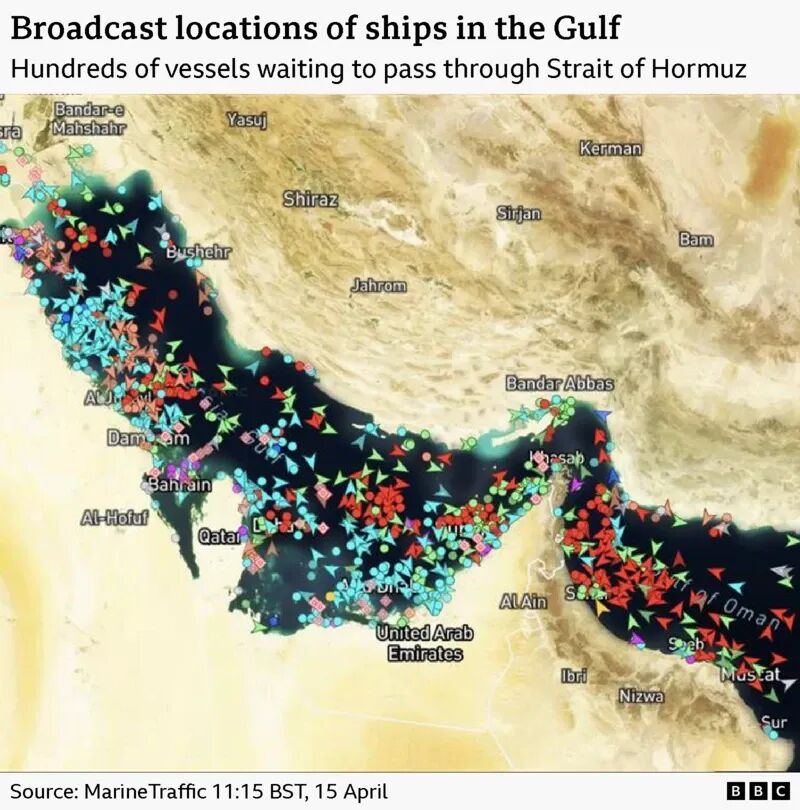
当升级态势触及全球经济的基础设施时,其更深层次的意义便会充分显现出来。霍尔木兹海峡的不稳定,使一场地区性对抗转化为一场全球经济事件。这条狭窄的海上通道并不仅仅是一条运输路线;它还是一个结构性节点,世界能源供应中相当大的一部分正是经由此处流动。一旦它变得不稳定,其影响便是立竿见影且波及深远的。
The deeper significance of escalation becomes fully visible when it reaches the infrastructure of the global economy.The destabilization of the Strait of Hormuz transforms a regional confrontation into a global economic event.This narrow maritime corridor is not merely a transit route;it is a structural node through which a significant share of the world’s energy supply flows.Once it becomes unstable,the effects are immediate and far-reaching.
在这一背景下,权力已不仅仅通过军事力量来施加,它同样体现在扰乱流通的能力之中:转移风险、抬高成本,并将不稳定性跨境传导。伊朗尽管在军事上相对处于劣势,却恰恰展现出了这种能力。
In this context,power is no longer exercised solely through military force,but also through the ability to disrupt circulation:to shift risks,raise costs,and transmit instability across borders.Iran,despite its relative military inferiority,has demonstrated precisely this capacity.
伊朗:非对称性力量、战略杠杆与破坏逻辑
Iran:Asymmetric Power,Strategic Leverage,and the Logic of Disruption
如果说美国代表的是技术优势,以色列代表的是精确威慑,那么伊朗所代表的则是另一种战争模式:非对称的、经济性的和体系性的。
If the United States represents technological superiority and Israel precision deterrence,then Iran represents a different model of warfare:asymmetric,economic,and systemic.
伊朗的战略并不是为了在一场针对军事上更强大力量的常规战争中取胜。它围绕着一个更具可实现性的目标展开:把冲突成本提高到其对手在政治上或经济上都无法承受的程度。
Iran’s strategy is not designed to win a conventional war against militarily superior powers.It is built around a more attainable objective:raising the cost of conflict to a level that its adversaries cannot politically or economically sustain.
从防御走向非对称进攻
From Defense to Asymmetric Offense
随着时间推移,尤其是自2025年至2026年局势升级以来,伊朗已从一种以防御为主的姿态,转向更具主动性的非对称作战理论。这一转变主要体现在以下几个方面:
Over time,and especially since the escalation of 2025–2026,Iran has moved from a largely defensive posture toward a more assertive asymmetric doctrine.This shift includes:
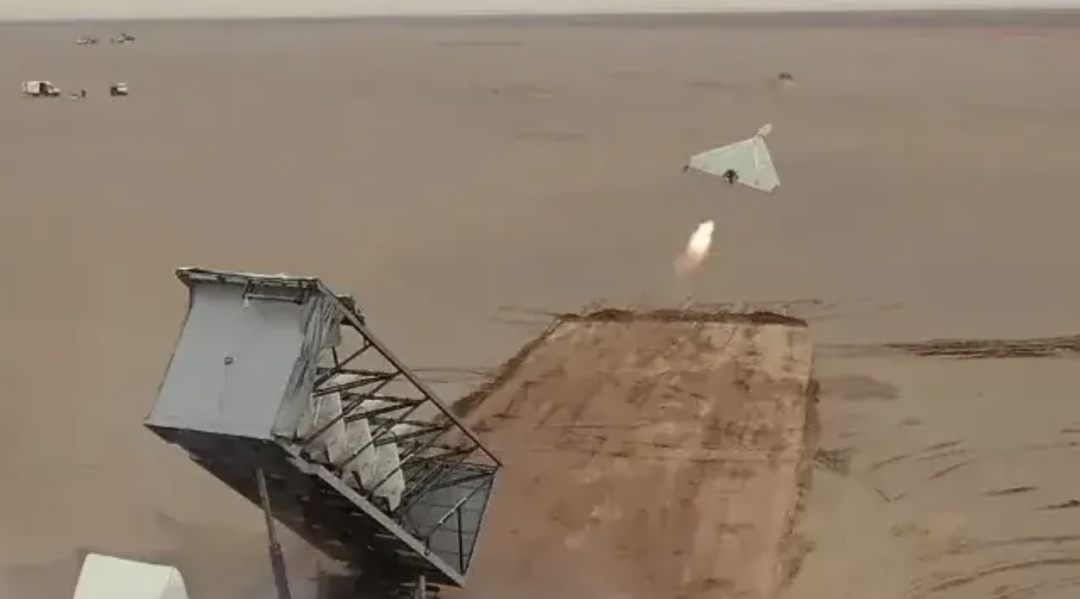
大规模使用弹道导弹和无人机;
在整个地区部署代理人网络及合作性力量网络;
将打击目标从单纯的军事资产扩大到经济与民用基础设施。
the use of ballistic missiles and drones in large volumes;
the deployment of proxy and partner networks across the region;
the targeting of economic and civilian infrastructure,not only military assets.
伊朗并未试图完全阻止来袭打击,而是着重于在承受破坏的同时保全报复能力,这种策略可被称为“非对称韧性”。这使其能够在持续高压下维持行动能力,并确保局势始终保留进一步升级的可能。
Rather than attempting to block incoming attacks entirely,Iran has focused on absorbing damage while preserving retaliatory capability,a strategy that may be described as asymmetric endurance.This allows it to remain operational under sustained pressure and ensures that escalation always remains possible.
伊朗沙赫德无人机从卡车式支架上发射。图源:伊斯兰革命卫队
霍尔木兹海峡:伊朗的战略重心
The Strait of Hormuz:Iran’s Strategic Center of Gravity
伊朗最强大的资产,是其地理位置。伊朗位处霍尔木兹海峡沿线,这使其具备将一场地区战争转化为全球经济危机的能力。伊朗并未谋求彻底封锁海峡,而是采取了一种更为有效的策略:选择性扰乱。
Iran’s most powerful asset is geography.Its position along the Strait of Hormuz gives it the ability to transform a regional war into a global economic crisis.Rather than seeking a full closure of the strait,Iran has adopted a more effective strategy:selective disruption.
这包括:
布设水雷行动;
使用无人机和快艇发动袭扰;
对商业航运实施骚扰与干扰。
This includes:
mining operations;
drone and fast-boat attack
harassment of commercial shipping.
其目的并非实行全面封锁,而是制造一种经过校准的不确定性:足以推高价格、扰乱供应链,并迫使全球予以关注。这由此形成了一种根本性的战略不对称。伊朗并不需要在军事上击败美国;它所需要的,只是扰乱全球经济。
The purpose is not total blockade,but calibrated uncertainty:enough to raise prices,unsettle supply chains,and compel global attention.This produces a fundamental strategic asymmetry.Iran does not need to defeat the United States militarily;it only needs to disrupt the global economy.
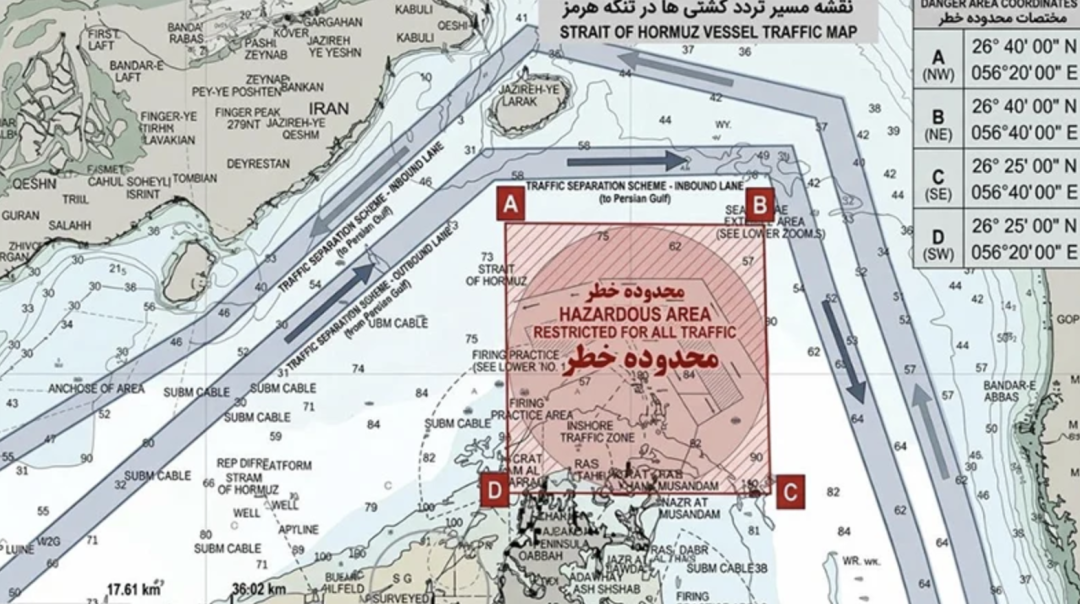
4月9日伊朗国家安全委员会发布的霍尔木兹海峡分道通航方案。图源:伊斯兰革命卫队
经济战作为“拉平差距”的手段
Economic Warfare as Equalizer
因此,伊朗已将战场从领土范围扩展到了全球市场。对海湾地区能源基础设施和海上航线的扰动,会通过通货膨胀、贸易、保险、航运以及金融稳定等领域产生连锁反应。
Iran has thus expanded the battlefield beyond territory and into global markets.The disruption of Gulf energy infrastructure and maritime routes reverberates through inflation,trade,insurance,shipping,and financial stability.
这也正是伊朗战略尤为有效之处。它能够:
This is where Iran’s strategy becomes especially effective.It:
将压力转嫁给依赖进口的经济体;
分化西方与非西方国家的应对;
对远在该地区之外的行为体形成间接杠杆。
shifts pressure onto import-dependent economies;
divides Western and non-Western responses;
creates indirect leverage over actors far beyond the region.
从这个意义上说,伊朗并不只是在打一场战争。它是在将相互依存武器化。其战略并不依赖于战场主导地位,而是依赖于其在能源市场、供应链和通胀动态等方面放大体系性压力的能力。其结果是,一种不再受地理范围所限、而是以结构性方式分布于全球体系之中的升级形态。
In this sense,Iran is not merely fighting a war.It is weaponizing interdependence.Its strategy does not depend on battlefield dominance,but on its capacity to amplify systemic pressure across energy markets,supply chains,and inflationary dynamics.The result is a form of escalation that is no longer geographically contained,but structurally distributed across the global system.
一种以生存而非胜利为目标的战略
A Strategy of Survival,Not Victory
尽管拥有上述优势,伊朗仍面临严峻制约:经济脆弱、制裁压力、内部政治紧张,以及部分地区影响力网络的弱化。即便如此,它也展现出相当的韧性。即使在屡遭打击之后,其海上力量和非对称作战能力中的关键部分仍然保持完好。
Despite these advantages,Iran operates under serious constraints:economic fragility,sanctions pressure,internal political tensions,and the weakening of some regional influence networks.Yet it has also demonstrated resilience.Even after repeated strikes,key elements of its naval and asymmetric capabilities have remained intact.
这进一步印证了一个关键判断:伊朗的目标是战略生存与持续性扰乱的结合。随着传统能源通道趋于不稳定,全球市场也开始重新配置。替代性供应方,尤其是俄罗斯,因而获得了出人意料的战略分量。由于其出口通道较少受到霍尔木兹海峡局势影响,再加上美国解除对俄制裁,俄罗斯能够提供一种在危机时期愈发稀缺的东西:相对可靠性。这里的悖论十分清楚:一场本意在于削弱某一行为体的冲突,最终却强化了其他行为体,而这种强化并非通过结盟实现,而是通过经济机会在非预期中的再分配实现的。从这个意义上说,战争不仅会摧毁,也会重新分配。
This reinforces a critical point:Iran’s objective is not decisive victory,but strategic survival combined with sustained disruption.
As traditional energy routes become unstable,the global market begins to reconfigure itself.Alternative suppliers,especially Russia,gain unexpected strategic weight.With export routes less exposed to Hormuz and lifting of its sanction bt the United States,Russia can offer what becomes scarce in times of crisis:relative reliability.The paradox is clear.A conflict intended to weaken one actor ends up strengthening others,not through alliance,but through the unintended redistribution of economic opportunity.War,in this sense,does not merely destroy.It also reallocates.
与此同时,中国处于一种更为模糊的地位。作为深度嵌入全球贸易体系、且依赖中东能源流动的大国,中国在结构上直接暴露于这场危机之中。然而,它仍然避免将这种暴露转化为直接的安全介入。其应对依旧审慎,强调稳定与对话,同时依赖间接性的影响渠道。
Meanwhile,China occupies a more ambiguous position.Deeply embedded in global trade and dependent on Middle Eastern energy flows,it is structurally exposed to the crisis.Yet it continues to avoid translating that exposure into direct security engagement.Its response remains cautious,emphasizing stability and dialogue while relying on indirect channels of influence.
这种策略或许能够带来短期灵活性,但也引出了一个更长远的问题:一个在全球经济网络中占据如此核心位置的大国,如果在地缘政治风险急剧上升的时刻选择缺席,它还能否保持战略可信度?随着时间推移,这种选择性介入,可能会削弱那些面临安全威胁、却得不到相应保障的伙伴对其的信心。
This strategy may offer short-term flexibility,but it raises a longer-term question:can a power so central to global economic networks remain strategically credible if it is absent at moments of acute geopolitical risk?Over time,selective engagement may erode confidence among partners facing security threats without corresponding guarantees.
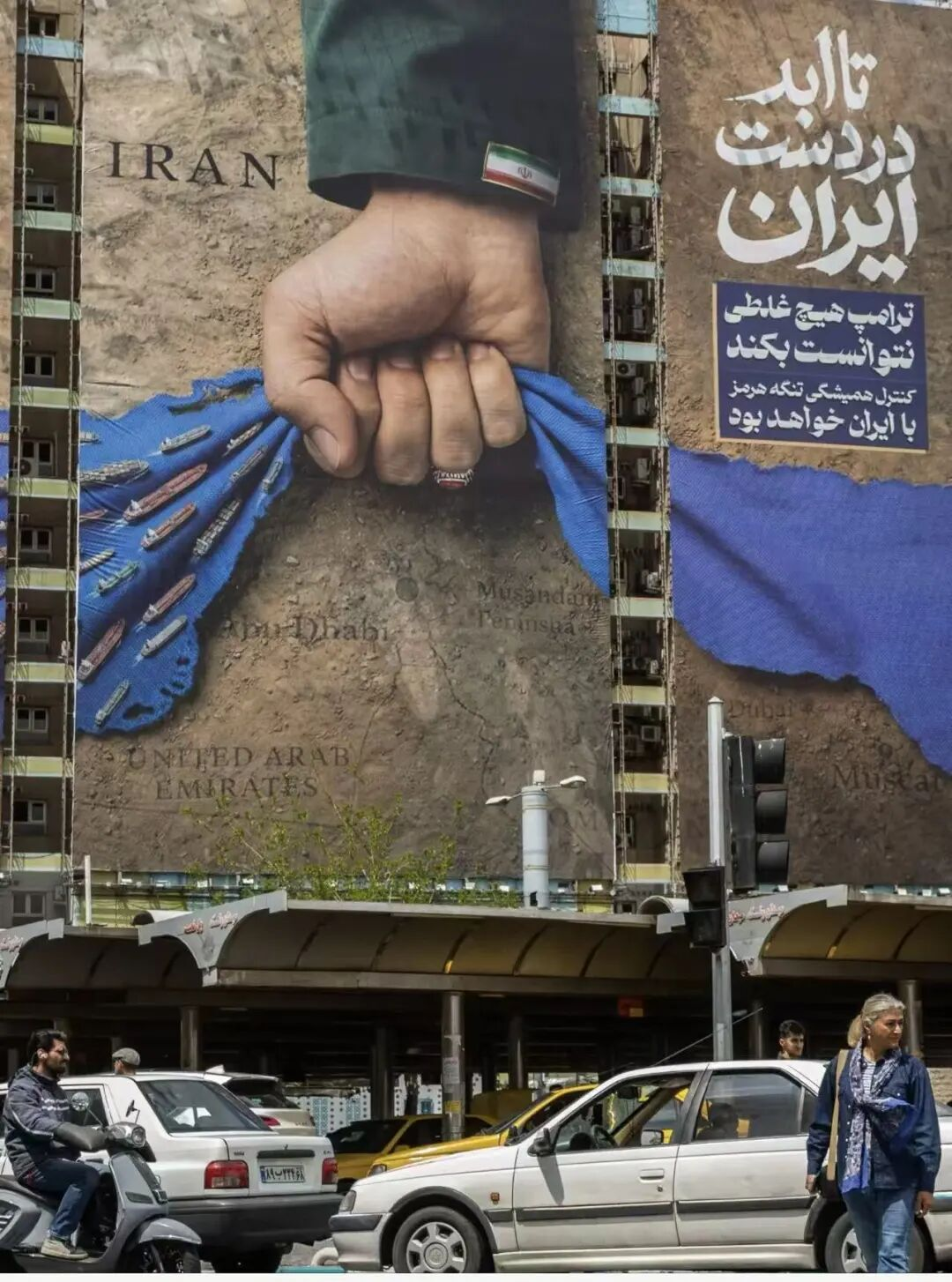
德黑兰一处广告牌上绘有霍尔木兹海峡图案,并悬挂着一条写有“永远掌控在伊朗手中”的横幅。图源:《纽约时报》
以色列:战术优势与战略模糊性
Israel:Tactical Superiority,Strategic Ambiguity
以色列在塑造这场冲突的军事节奏方面发挥了决定性作用,然而,其所处位置始终带有一种持续存在的张力:一方面是战术上的成功,另一方面则是战略上的不确定性。
Israel has played a decisive role in shaping the military tempo of the conflict,yet its position is marked by a persistent tension between tactical success and strategic uncertainty.
战略目标:削弱,而非占领
Strategic Objectives:Degrade Rather Than Occupy
以色列的核心目标通常并不是领土征服,而是能力削弱。
Israel’s core objective has not often been territorial conquest,but capability degradation.
这包括:
削弱伊朗的导弹与无人机基础设施;
延缓或削弱伊朗与核相关的能力;
降低地区代理人网络的实际作战效能。
This included:
weakening Iran’s missile and drone infrastructure;
delaying or degrading nuclear-related capabilities;
reducing the operational effectiveness of regional proxy networks.
这种做法反映了以色列长期以来的一项战略原则:防止对手在战略能力上接近均势,尤其是在导弹能力和核潜力方面。
This approach reflects a long-standing Israeli doctrine:preventing adversaries from approaching strategic parity,particularly in missile capability and nuclear potential.
空袭行动已造成严重破坏。然而,伊朗似乎仍保有相当程度的残余能力,尤其是在导弹力量方面。这凸显出一个结构性限制:空中力量可以削弱深嵌式基础设施,但很难将其彻底清除。
Air campaigns have inflicted serious damage.Yet Iran appears to retain substantial residual capability,especially in missile forces.This underlines a structural limitation:air power can degrade embedded infrastructure,but it rarely eliminates it entirely.
升级逻辑与战略风险
Escalation Logic andStrategic Risk
以色列的战略同样包含升级管理这一层面。它试图通过提高冲突烈度,改变既有战略方程,迫使对手作出代价高昂的回应,或陷入误判。
Israel’s strategy also continue to include an element of escalation management.By raising the intensity of the conflict,it seeks to alter the strategic equation and force adversaries into costly responses or miscalculation.
然而,升级本身也伴随着风险:
在持续作战中对美国形成更深程度的依赖;
引发地区外溢;
一旦行动进一步扩大,国际政治成本也将不断上升。
Yet escalation carries risks:
deeper dependence on the United States for sustained operations;
regional spillover;
growing international political costs if operations broaden.
其中的悖论十分明显:以色列在战术层面优势清晰,但其长期战略结果仍然充满不确定性。
The paradox is evident.Tactical superiority is clear,but long-term strategic outcomes remain uncertain.
拦截困境
The Interception Dilemma
以色列的一项关键脆弱性,体现在拦截的经济性上。伊朗使用相对低成本的无人机和导弹,迫使以色列动用价格高昂的拦截系统。久而久之,这就形成了一种不利的交换比率:进攻方付出较少,防御方却要承担高得多的成本。
One of Israel’s key vulnerabilities lies in the economics of interception.Iran’s use of relatively low-cost drones and missiles obliges Israel to deploy expensive interception systems.Over time,this creates an unfavorable exchange ratio:the attacker spends less;the defender spends far more.
如果这种模式持续下去,即便是技术先进的军队,也会承受显著压力。简言之,以色列在战术上是有效的,但这并不意味着它必然能够取得战略主导地位。
If sustained,such a pattern can impose significant strain even on a technologically advanced military.Israel,in short,is tactically effective,but not guaranteed strategic dominance.
欧洲:从战略震荡到战略重估
Europe:From Strategic Shock to Strategic Reassessment
在这场战争中,欧洲及其他次级行为体所扮演的角色受到更大限制。这些行为体并不塑造冲突的发展轨迹;它们所承受的是冲突带来的后果。能源价格波动、供应中断和通货膨胀,将外部冲击转化为国内的政治与经济压力。即便是加强战略自主的努力,也在很大程度上仍然是被动反应,其驱动力不是去主导不稳定,而是去应对不稳定。
In this war,the role of Europe and other secondary actors is even more constrained.These actors do not shape the trajectory of the conflict;they absorb its consequences.Energy price volatility,supply disruptions,and inflation convert external shocks into domestic political and economic stress.Even efforts to strengthen strategic autonomy remain largely reactive,driven by the need to manage instability rather than direct it.
这场冲突进一步激化了一场已酝酿多年的争论:欧洲对外部安全保障的依赖,以及其自主行动能力的有限性。
The conflict has sharpened a debate that has been building for years:Europe’s dependence on external security guarantees and its limited capacity for autonomous action.
欧洲安全框架仍然锚定于北约,并由此延伸至美国。然而,这场冲突的早期阶段暴露出欧洲各国政府对升级决策的影响力十分有限,从而进一步强化了外界对于其依赖性以及能动性减弱的担忧。
The European security framework remains anchored in NATO and,by extension,the United States.Yet the early stages of the conflict exposed the limited influence of European governments over escalation decisions,reinforcing concerns about both dependence and diminished agency.
因此,“战略自主”这一理念已不再只是停留在理论层面,而是开始切实进入具体政策讨论,议题包括:
As a result,the idea of strategic autonomy is no longer merely theoretical.It now informs concrete policy debates over:
重建欧洲的国防工业基础;
储备弹药和关键零部件;
降低对非欧洲供应商提供关键军事技术的依赖;
提升联合采购与快速反应能力。
rebuilding Europe’s defense-industrial base;
stockpiling munitions and critical components;
reducing dependence on non-European suppliers for key military technologies;
improving joint procurement and rapid-response capabilities.
这一讨论并非抽象空泛。它直接关系到俄罗斯入侵乌克兰所带来的教训;这场战争暴露出欧洲在军事准备方面存在严重的弹药短缺和深层次的工业能力不足。
This discussion is not abstract.It is directly linked to the lessons of Russia’s invasion of Ukraine,which exposed severe ammunition shortages and deep industrial deficiencies in European military preparedness.
在这场不断演进的讨论中,法国占据着尤为突出的地位。作为欧盟中唯一拥有独立核威慑力量的成员国,法国日益被视为不是集体防务的替代者,而是一个更具自主性的欧洲安全框架的潜在支柱。
Within this evolving debate,France occupies a particularly prominent position.As the only EU member with an independent nuclear deterrent,France is increasingly viewed not as a substitute for collective defense,but as a potential pillar of a more autonomous European security framework.
欧洲军力规模可观:欧洲北约成员合计拥有约190万现役军人,并配备包括F-35战机和豹2主战坦克在内的先进装备。自2023年以来,欧洲整体防务支出也显著上升,波兰等国甚至提出将军费提升至GDP的5%。图源:路透社
全球南方:影响不止于能源
The Global South:Beyond Energy
这场战争对全球南方的冲击,远远超出了能源价格层面。冲突加剧了全球粮食体系原有的脆弱性。非洲、中东和南亚的许多国家,仍然高度依赖进口化肥,尤其是氮肥产品。航运线路受扰、能源价格上涨以及与制裁相关的摩擦,都推高了化肥成本。
The impact of the war on the Global South extends far beyond energy prices.The conflict has aggravated existing vulnerabilities in global food systems.Many countries across Africa,the Middle East,and South Asia remain highly dependent on imported fertilizers,particularly nitrogen-based products.Disruptions to shipping routes,rising energy prices,and sanctions-related frictions have all increased fertilizer costs.
由于化肥生产本身高度依赖能源,特别是以天然气为原料的氮肥,其生产成本会直接受到能源价格上升的传导影响,并进一步推高粮食生产成本。其结果是:
Because fertilizer production is highly energy-intensive,especially in the case of nitrogen fertilizers derived from natural gas,higher energy prices feed directly into food production costs.The result is:
粮食价格上涨;
粮食进口国面临更大压力;
脆弱地区的粮食不安全状况进一步恶化。
rising food prices;
greater pressure on food-importing states;
worsening food insecurity in vulnerable regions.
因此,许多发展中经济体不得不同时承受能源、粮食和物流成本的多重冲击,使其成为这场冲突中在结构上暴露程度最高、受损最深的一类输家。
Many developing economies are therefore forced to absorb simultaneous shocks in energy,food,and logistics costs,making them among the most structurally exposed losers of the conflict.
战争战略、能力约束,以及正在浮现的赢家与输家
War Strategies,Capacity Constraints,and Emerging Winners and Losers
这场冲突并不只是海湾地区的一场区域性军事对抗。它同时也是一场具有启示意义的检验,检验大国如何发动战争、如何管理资源,以及如何为更长期的竞争进行布局。这里关注的是实践层面的问题:谁在做什么,使用了哪些工具,以及由此谁受益、谁受损。
This conflict is not merely a regional military confrontation in the Gulf.It is also a revealing test of how major powers wage war,manage resources,and position themselves for longer-term competition.The focus here is practical:who is doing what,with which tools,and who benefits or loses as a result.
美国:受制约的高强度战争
The United States:High-Intensity Warfare Under Constraint
美国仍然凭借航母打击群、远程空中力量以及精确制导弹药,持续投射无与伦比的军事力量。这种作战主导地位,从冲突一开始便已清晰可见。
The United States continues to project unparalleled military power through naval strike groups,long-range air assets,and precision-guided munitions.This operational dominance has been visible from the earliest stages of the conflict.
然而,这种战争模式也暴露出一种日益加剧的张力。美国虽然能够迅速投送压倒性的力量,但要在一段时间内持续维持这种强度则更加困难。精确制导弹药、拦截导弹以及先进空射系统的快速消耗,暴露出其在库存深度和生产能力方面的脆弱性。
Yet this model of warfare also reveals a growing tension.While the United States can deliver overwhelming force quickly,sustaining that level of intensity over time is more difficult.The rapid consumption of precision-guided munitions,interceptor missiles,and advanced air-launched systems exposes vulnerabilities in stockpile depth and production capacity.
这一挑战并不仅仅是财政问题,更是工业问题。国防供应链依赖专用零部件、熟练劳动力以及复杂制造流程,而这些都无法在短时间内迅速扩张。因此,关键系统的补充周期可能需要以“年”而非“月”来计算。
The challenge is not purely financial.It is industrial.Defense supply chains depend on specialized components,skilled labor,and complex manufacturing processes that cannot be expanded rapidly.Replenishing key systems may therefore take years rather than months.
另一个值得关注的维度,是军事行动与美国国防工业基础之间的关系。这场冲突中所动用的诸多武器系统,主要来自既有库存,以及原本部署于欧洲或其他战区的资源。它们的投入使用,会进一步加快替换与现代化升级的需求。这种补充循环支撑着国防生产,带动工业活动,并维持就业。
A further dimension concerns the relationship between military operations and the U.S.defense-industrial base.Systems deployed in this conflict are drawn from existing stockpiles and mainly from Europe,or in other theaters.Their use accelerates the demand for replacement and modernization.This replenishment cycle sustains defense production,generates industrial activity,and supports employment.
从这个意义上说,现代战争不仅关乎“能否作战”,也关乎“能否在时间推移中持续维持并再生战力”。
In this sense,modern warfare is not only about the ability to fight.It is also about the ability to sustain and regenerate force over time.
与此同时,美国也存在能力短板。其中一个例子是反水雷能力。在霍尔木兹海峡这类狭窄海上咽喉要道中,这种能力至关重要。而相关资产的相对稀缺,恰恰凸显出高端力量投送能力与实际作战适应能力之间存在失衡。
There are also capability gaps.One example concerns mine countermeasure capacity,which is crucial in narrow maritime chokepoints such as the Strait of Hormuz.The relative scarcity of such assets highlights an imbalance between high-end force projection and operational adaptability.
综合来看,这些动态表明,尽管美国依然保持着无可匹敌的军事投射范围,但其在长期冲突情境下的可持续性正越来越受到审视,尤其是在未来可能与中国或其他竞争对手发生对抗的背景下,更是如此。
Taken together,these dynamics suggest that while the United States retains unmatched military reach,its sustainability in prolonged conflict scenarios is increasingly under scrutiny,especially in light of a possible future confrontation with China or other competitors.
俄罗斯:通过扰动实现战略机会主义
Russia:Strategic Opportunism Through Disruption
对俄罗斯而言,这场冲突与其说是一个直接军事介入的战场,不如说是一个获取间接战略收益的机会。由于已深度卷入乌克兰战事,莫斯科总体上采取了一种借势获利的姿态。
For Russia,the conflict is less a direct military arena than an opportunity for indirect strategic gain.Already deeply engaged in Ukraine,Moscow has largely adopted a posture of opportunistic benefit.
能源价格上涨、市场波动加剧以及全球能源流向的重新调整,都对俄罗斯有利。更高的油气收入有助于对冲乌克兰战争带来的成本压力,而西方注意力的转移,也减轻了俄罗斯周边直接战略环境所承受的外部压力。
Rising energy prices,market volatility,and the redirection of global energy flows work to Russia’s advantage.Higher hydrocarbon revenues help offset costs impounded by the war in Ukrain,and while Western distraction reduces pressure on Russia’s immediate strategic environment.
从这个意义上说,俄罗斯的姿态可以概括为:借由体系性分散注意力而实现被动获益。
In this sense,Russia’s posture may be described as one of passive gain through systemic distraction.
中国:谨慎布局与经济收益
China:Cautious Positioning and Economic Advantage
中国的处境则有所不同。北京避免直接军事介入,同时将自身定位为一个审慎的稳定维护者和经济受益者。
China’s position is different.Beijing has avoided direct military involvement while positioning itself as both a cautious stabilizer and an economic beneficiary.
其核心利益主要在于能源安全与贸易连续性。海湾局势的不稳定,提升了替代性供应安排、折价能源获取以及物流网络多元化的价值。与此同时,这场冲突也为中国提供了一个观察美国军事承压、供应链脆弱性以及联盟行为模式的机会,而这些经验对于未来印太地区的情境具有高度相关性。
Its primary interests lie in energy security and trade continuity.Gulf instability increases the value of alternative supply arrangements,discounted energy access,and diversified logistics networks.At the same time,the conflict provides China with an opportunity to observe U.S.military strain,supply chain weaknesses,and alliance behavior,lessons that are highly relevant to future Indo-Pacific scenarios.
中国的优势,相比于高调介入,更集中于战略耐心与有选择性的经济获益。
China’s advantage lies less in dramatic intervention than instrategic patience and selective economic gain.
联盟裂痕与欧洲缺位
Coalition Fractures and the European Gap
这场冲突最引人注目的特征之一,是西方阵营缺乏凝聚性的协调,尤其是在欧洲内部表现得更为明显。若干欧洲国家并未真正参与早期战略决策,因此对相关政策的政治认同有限,在某些情况下甚至仅提供审慎或不情愿的支持。这与以往一些跨大西洋协调看起来更为稳固的危机形成鲜明对比。
One of the most striking features of this conflict has been the absence of cohesive Western alignment,particularly within Europe.
Several European states were not meaningfully involved in early strategic decisions,producing limited political ownership and,in some cases,cautious or reluctant support.This stands in contrast to earlier crises in which transatlantic coordination appeared more robust.
随着局势演进,尤其是欧盟,愈发像一个旁观者,而非具有决定性影响的行为体。这进一步强化了欧洲内部原已存在的一场辩论:是否需要更大程度的战略自主。
As this scenario unfolds,the European Union,in particular,look more like an observer than a decisive actor.This has reinforced an existing internal debate over the need for greater strategic autonomy.
在这一背景下,法国的重要性再次上升。其核威慑力量正越来越多地被讨论为未来欧洲安全架构中的一个潜在支柱。尽管更广泛的“欧洲核保护伞”设想在政治上仍然敏感,但它已不再只是停留在理论讨论之中。
Within this setting,France has acquired renewed importance.Its nuclear deterrent is increasingly discussed as a potential pillar of a future European security architecture.While the notion of a broader European nuclear umbrella remains politically sensitive,it is no longer confined to theoretical debate.
冲突经济中的赢家
Winners of the Conflict Economy
除直接卷入敌对行动的国家之外,这场冲突还催生出一批相对明确的经济受益者。
Beyond the states directly engaged in hostilities,the conflict has generated a distinct set of economic beneficiaries.
其中包括:
能源生产国,它们受益于价格上涨和市场趋紧;
俄罗斯,其收益来自油气收入增加以及能源流向重组;
中国,其可能获得更有利的能源安排和更大的贸易杠杆;
保险与航运企业,它们从更高保费和风险定价中获利;
国防工业,尤其是美国和欧洲的军工产业,它们受益于对武器、弹药、拦截系统以及补充更新周期的持续需求。
These include:
energy producers,who benefit from elevated prices and tighter markets;
Russia,which gains from hydrocarbon revenues and shifting energy flows;
China,which may secure favorable energy arrangements and greater trade leverage;
insurance and shipping firms,which profit from higher premiums and risk-related pricing;
defense industries,particularly in the United States and Europe,which benefit from sustained demand for weapons,ammunition,interception systems,and replacement cycles.
输家与结构性成本
Losers and Structural Costs
在主要输家之中,其所承受的成本同样不容忽视:
Among the principal losers,the costs are equally significant:
美国,面临不断加剧的资源压力、持续上升的作战成本以及过度扩张的风险;
欧盟,在政治上被边缘化,在经济上高度暴露,且内部意见分裂;
地区稳定本身,因海湾国家正面对更强烈的不安全感与不确定性;
全球南方,在那里,能源、化肥、运输和粮食成本的上升,不成比例地冲击着本已脆弱、依赖进口的经济体。
the United States,which faces mounting resource strain,rising operational costs,and the risk of overextension;
the European Union,which is politically marginalized,economically exposed,and internally divided;
regional stability itself,as Gulf states confront heightened insecurity and uncertainty;
the Global South,where higher energy,fertilizer,transport,and food costs disproportionately affect already vulnerable,import-dependent economies.
These losses are not evenly distributed.They fall most heavily on those least able to shape the strategic environment.
初步教训与正在显现的方向
Early Lessons and Emerging Directions
从这场冲突中,已经可以总结出若干初步教训。
Several early lessons can already be drawn from this conflict.
第一,在现代战争中,可持续性与能力本身同样重要。
第二,工业能力如今已是一种战略资产,而不再只是背景条件。
第三,联盟不仅需要军事上的协调一致,也需要政治上的包容与参与。
第四,在塑造冲突结果方面,经济行为体的重要性并不亚于军事行为体。
第五,非对称战争有可能通过更为复杂、更具总体性的战略取得胜势。
First,sustainability matters as much as capability in modern warfare.
Second,industrial capacity is now a strategic asset,not a background condition.
Third,alliances require political inclusion,not merely military alignment.
Fourth,economic actors are as influential as military actors in shaping conflict outcomes.
Fifth,Asymetric warfare could be won with a more sophisticated and all encompassing strategies.
对欧洲来说,这些教训正日益沉淀为一套新的战略表述:自力更生、战略自主和防务一体化。尽管这些表述能否最终落实为具体政策仍存不确定性,但相关讨论的总体走向已十分清晰。
For Europe,these lessons are increasingly being translated into a new strategic vocabulary:self-reliance,strategic autonomy,and defense integration.Whether this vocabulary becomes policy remains uncertain,but the direction of debate is unmistakable.
结论:一场没有胜者的冲突,一个失去锚点的体系
Conclusion:A Conflict Without Victory,a System Without Anchor
这里所考察的这场冲突,并未走向决定性的军事胜利,也没有带来清晰的权力再分配。相反,它揭示出国际政治中一种更深层的结构性现实:单一权力组织中心正在被侵蚀,而稳定的替代性安排却并未出现。
The conflict examined here does not culminate in a decisive military victory or a clear redistribution of power.Instead,it reveals a deeper structural reality in international politics:the erosion of a single organizing center of power without the emergence of a stable alternative.
那种认为压倒性的军事能力能够带来决定性结果的传统假设,已变得越来越难以维持。尽管美国拥有技术优势,但它在工业产能、库存补充以及政治承载力方面正面临日益增大的约束。这些限制并不以任何简单意义上的方式构成衰落,但它们的确削弱了这样一种假设:在持久、跨战区冲突的时代,单靠军事力量就能够确保政治结果。
The traditional assumption that overwhelming military capability can produce decisive outcomes has become increasingly difficult to sustain.Despite its technological superiority,the United States faces growing constraints in industrial capacity,stockpile regeneration,and political bandwidth.These limitations do not amount to decline in any simple sense,but they do weaken the assumption that military power alone cannot secure political outcomes in an era of prolonged,multi-theater conflict.
对以色列而言,这场战争表明,战术上的成功在实现战略性解决方面是有其限度的。其作战能力依然强大,但更广泛的目标——永久性削弱伊朗的能力——仍然难以实现。伊朗导弹力量和非对称作战资产的持续存在,指向了现代冲突中的一种反复出现的模式:技术上占优的行为体能够施加代价,但往往难以施加终局。
For Israel,the war demonstrates the limits of tactical success in achieving strategic resolution.Its operational capabilities remain formidable,yet the broader objective of permanently degrading Iran’s capabilities remains elusive.The persistence of Iran’s missile and asymmetric assets points to a recurring pattern in modern conflict:technologically superior actors can impose costs,but they often struggle to impose finality.
伊朗则使局势进一步复杂化。尽管遭受了重大打击,它仍保有通过扰乱能源市场和制造地区不稳定、在其疆域之外施加代价的能力。这并不等同于胜利,但确实构成了一种战略杠杆。伊朗既非明确的赢家,也不是被击败的力量,而是一个持续性的扰动者,能够在其常规军事实力之外影响局势走向。
Iran further complicates the picture.Despite significant damage,it has retained the ability to impose costs well beyond its borders through disruption of energy markets and regional instability.This does not amount to victory,but it does constitute a form of strategic leverage.Iran emerges neither as a clear winner nor as a defeated power,but as a persistent disruptor capable of influencing outcomes beyond its conventional military weight.
与此同时,欧洲呈现出来的并不是一个核心行为体,而是一个受到限制的行为体。这场冲突强化了人们长期以来对战略依赖和决策碎片化的担忧。围绕战略自主的新一轮讨论,以及法国作为潜在安全支点所受到的日益关注,反映出各方对依赖外部安全保障日益增长的不安。然而,制度、政治和战略层面的分歧,仍在继续限制欧洲采取协调一致行动的能力。
Europe,meanwhile,emerges not as a central actor,but as a constrained one.The conflict reinforces longstanding concerns about strategic dependence and fragmented decision-making.The renewed debate over strategic autonomy,and the growing attention given to France as a possible security anchor,reflect rising unease over reliance on external guarantees.Yet institutional,political,and strategic divisions continue to limit Europe’s capacity to act cohesively.
除直接参战方之外,这场冲突还产生了显著的次生效应。能源生产国、国防工业以及与风险相关的金融部门从这种扰动中获益,而全球南方则因能源价格上涨、粮食成本上升以及经济脆弱性加剧而承担了不成比例的代价。这种不对称性揭示了国际体系中权力与风险分布的不均衡。
Beyond the immediate participants,the conflict has generated significant secondary effects.Energy producers,defense industries,and risk-related financial sectors have benefited from disruption,while the Global South has borne disproportionate costs through higher energy prices,rising food costs,and increased economic vulnerability.This asymmetry reveals the uneven distribution of both power and risk in the international system.
综合来看,这些动态指向了一场更广泛的转型。这场冲突并未开启一种新的稳定秩序,而是加速了一个本已展开的过渡进程:国际体系正从单极格局走向一个更加碎片化、竞争性更强的局面。然而,碎片化并不会自动带来均衡。更常见的情况是,它会催生彼此交叠的竞争地带、不断变动的结盟关系,以及不稳定的威慑格局。
Taken together,these dynamics point to a broader transformation.The conflict does not inaugurate a new stable order.Rather,it accelerates a transition already underway:a movement away from a unipolar system toward a more fragmented and contested landscape.Yet fragmentation does not automatically produce balance.More often,it generates overlapping zones of competition,shifting alignments,and unstable deterrence.
在缺乏一个能够强制维持秩序的主导性霸权力量的情况下,未来可能出现几种不同的演变路径。
In the absence of a dominant hegemonic power capable of enforcing order,several trajectories become possible.
其一,是进一步的碎片化,其特征是相互竞争的势力范围、经济脱钩以及多边机构作用的削弱。在这样的世界中,权力将变得更加地方化,而合作也会愈发呈现交易性特征。
One is deeper fragmentation,marked by competing spheres of influence,economic decoupling,and weakened multilateral institutions.In such a world,power becomes more localized and cooperation increasingly transactional.
其二,是区域秩序的巩固,即各地区强国在自身势力范围内承担更多安全与治理责任。这可能提升区域自主性,但也可能加剧区域之间的竞争。
A second is the consolidation of regional orders,in which regional powers assume greater responsibility for security and governance within their own spheres.This may increase regional autonomy,but it may also intensify interregional rivalry.
其三,则是中等强国之间联盟的渐进形成。那些既非超级大国、也非边缘小国的国家,可能会越来越多地围绕安全、经济韧性和技术治理展开协调,通过构建灵活的对齐关系来共同管理风险。这类联盟不会取代现有制度,但可能在一定程度上弥补其侵蚀所造成的缺口。
A third lies in the gradual emergence of coalitions among middle powers.States that are neither superpowers nor minor actors may increasingly coordinate on security,economic resilience,and technological governance,forming flexible alignments to manage shared risks.These coalitions would not replace existing institutions,but they might partially compensate for their erosion.
就目前而言,这几种路径都尚未占据主导地位。因此,国际体系仍处于流动状态,其运行特征表现为局部性的对齐、间歇性的合作,以及反复出现的不稳定。因此,这里所讨论的这场冲突,并不只是一次地区危机。它更是世界秩序更广泛转型的一种体现:在这一转型中,权力更加分散,权威更具争议,结果也更难预测。这个新兴时代最鲜明的特征,不是任何单一行为体的支配地位,而恰恰是不确定性本身的持续存在。
At present,none of these trajectories is dominant.The international system therefore remains fluid,shaped by partial alignments,episodic cooperation,and recurrent instability.
The conflict examined here is thus not simply a regional crisis.It is a manifestation of a wider transition in world order:one in which power is more dispersed,authority more contested,and outcomes less predictable.The defining feature of this emerging era is not the dominance of any single actor,but the persistence of uncertainty itself.